





Acupunture
General Facts
Dr. Luis David Suárez is a Specialist in Medical Acupuncture graduated from UAM*. He also practices Tai Chi and Qi Gong.
With a Taoist and Bio-Energetic approach, he uses Acupuncture and Traditional Chinese Medicine as a very effective tool to treat any ailment.
Ultimately, what acupuncture does is to open a space for inner transformation: our ailing in flourishing, our suffering in joy and chains in freedom.”LDS
General Information
Acupuncture is a therapeutic discipline that forms part of Traditional Chinese Medicine (TCM), which consists in the insertion of needles in specific points distributed throughout the witdth and length of the human body.
Acupuncture-and in general all forms of TCM- are based on the meticulous observation of nature done by ancient Chinese philosophers (the Taoists outstandingly) who described the physiology of the human body through analogies of energetic states which they thought were common to all living beings and even had a place among the temporary oscilation of the physical universe in which we navigate through.
Unfortunately, the cultural isolation with which the Chinese people developed until the first half of the XXth century made it difficult for TCM to be spread throughout the rest of the World. Therefore, the comparison of their theories and postulates with the baggage of knowledge generated by modern science was impossible. Modern science, thanks to succesive incorporation of better technologies, generated new knowledge in every discipline but particularly of the human phisiology at an exponential rhythm during the last two centuries.
This lack of confrontation with western scientific knowledge and the cryptic to some point metaphysical language which is used in ancient Chinese texts were the cause that for many years, acupuncture and other techniques that emanated from TCM were considered esoteric, with no therapeutic value in a scientific context based each day on more objective and reproducible postulates.
Starting in the 50’s and 60’s years a phenomenon known as the cultural revolution was lived in China. In what refers to medicine and health the value of their traditional techniques and knowledge was recognized, and systematized in order to integrate them into a model of attention that incorporates the advances of scientific medicine without disdaining the benefits of traditional techniques, for the chinese government realized it would be impossible to meet the costs of free and universal modern medical attention (important postulate for the Chinese Communist Party) for their enourmous population if it didn´t incorporate the simple and economic therapeutic methods used with great efficacy by the chinese people through centuries.
A process of integration and systemization of TCM began, starting from the fact that its efficacy was proved according to the terms proposed by the universal scientific method. In China, numerous case studies and reports were developed to support the use of these disciplines in the treatment of many diseases. The result of this effort was that by the end of the 70’s years the World Health Organization (WHO) issued a verdict in which the efficacy of acupuncture is recognized for its treatment of some ailments, and all the governments in the World are given the recommendation of adopting these therapeutic techniques in their different health systems.
At the same time, the WHO has elaborated a document called “Guidelines for basic training and safety in acupuncture”, in which the necessary information is given in order that acupuncture is correctly taught in all countries, therefore used in a safe way.
Acupuncture in Mexico
Nowadays in Mexico there is an Official Norm for the practice of human acupuncture, in which the general framework for the practice of this discipline as a complementary therapy in medical attention for open population is established (first level of attention) in our country. This norm appears in the Federation’s Official Newspaper with the date May 7th, 2002, and was made official during the second half of the year 2006.
Before 1986, the Instituto Politécnico Nacional (IPN) became the first institution of higher education to teach acupuncture as a medical specialty. Befor that, the teaching of acupuncture in our country was limited to associations of acupuncturists and private technical schools which did not request the student to have any prior medical education, therfore, the quality of the graduates from such courses was very heterogenous. In our country, from the decade of the 70′s, in the wake of the efforts done by outstanding proffesionals in medicine, but especially thanks to the great acceptance of this therapy among the population, many efforts were made so that acupuncture could become a professional practice. Thanks to those efforts nowadays, besides the IPN, also at the Autonomous University of Mexico (UAM Iztapalapa) acupuncture is being imparted as a medical specialty. There are other Universities that offer acupuncture courses at different levels and durations (majors and updatings) such as the University of Guadalajara, the Autonomous University of Chapingo, Autonomous University of Puebla, Autonomous University of Veracruz, The UNAM in the FES of Acatlan and Iztacla, besides other private schools and institutes.
Unfortunately, the slow professionalization of the practice of acupuncture in Mexico has given rise to quacks who with no scientific knowledge whatsoever have disseminated a mistaken idea about acupuncture. In spite of having helped many sick people, they have also put others’ lives in danger for not having the necessary knowledge to diagnose correctly and establish a treatment in consequence, or just by not being aware of the limitations that, like any other therapy, acupuncture can have.
Currently, the majority of scientific doctors (or allopaths, as they like to be called) have the idea that acupuncture does not have a scientific foundation. And in spite that many patients call upon acupuncture or other complementary medicines, the “allopath” doctor does not know the indications, mechanisms of action and effects of acupuncture, and they are also not aware that many of them are being scientifically well documented each time. In order to verify the above, check out the list of serious scientific references that the Institute of Health and the FDA of the US government approved of its use.
Acupuncture as a Complementary Therapy in Clinical Medicine Nowadays
Due to the fact that muscular-skeletical originated pain responds to acupuncture in a dramatic form, this therapy is known fundamentally for the benefits and advantages of its use for the treatment of pain than for any other of its indications. However, in the hands of an experienced doctor who receives training in TCM and acupuncture, these tools can be applied to many other health disorders and be incorporated into the repertoire of useful interventions to improve the quality of life of the patient, as a complement, never the substitute, of the “allopathic” treatment for chronical-degenerative diseases and their acute complications.
For example, in allergic sinusitis which is not controlled with antihistaminics, steroids and antibiotics, acupuncture can be an excellent coadjuvant to the routine treatment, often minimizing or even abolishing the need of medicamentous control and liberating the patient from the cycles of exacerbations and remisions. Another example would be the case of an ileo paralythic in a postoperated patient, for example a hip fracture. In addition to fasting and a nasogastric probe at continuous suction, acupuncture can be used to reestablish the intestinal motility and significantly shorten the recovery time for the patient. Bronchial asthma and chronical bronchiospasm are other examples of illnesses in which acupuncture reduces the dose of bronchiodilators requested by the patient, minimizing the colateral effects of such drugs and coadjuvating in the prevention of a dependancy of steroids.
In this context, the efficacy of acupuncture should be expected after being submitted to an adequate number of sessions (often more than 6) taking into account the general condition of the patient, the chronicity of his ailment, the medicines and the doses of them used to control it, besides other factors such as the level of coexisting anxiety or depression.
In order for medical acupuncture to offer efficacy and safety to patients it is fundamental that the diagnosis of the ailments is performed in the context of more precise clinical standards and with the most advanced medical technology that is most appropiate for it. Once the diagnosis is established with precision and the routine treatments are established for them, medical acupuncture can be used in the allopathic clinical context noticeably reducing the need for further medical intervention and providing an elevated quality of life to the patient.
Indications of acupuncture according to WHO and the NIH
Below are two tables in which diseases and conditions, where acupuncture has a proved efficacy, are listed. The first one of them corresponds to the conditions in which the NIH of the USA approves acupuncture use, while the second table refers to the conditions in which the OMS reccomends its use. It must be made clear that these lists are not exhaustive nor exclude other traditional indications of acupuncture that do not appear in them.
|
Table 1. Conditions in which Acupuncture is indicated According to the NIH of USA and the American Society of Acupuncture |
|
| Control of chronic and acute pain | Artritis y artrosis |
| Postoperatory or postraumatic ileo | Bursitis, tendonitis, carpal tunnel syndrome |
| Muscular spasms, trembling, tics, contractures | Menstrual cramps and pelvic pain |
| Parestesias | Insomnia |
| Anxiety, panic attacks | Anorexia |
| Desintoxication for drug abuse | Idiopathic palpitations, sinus tachicardia |
| Neuralgias (of the trigeminal, Herpes Zoster, postherpethic, others) | Allergic sinusitis and rhinitis |
| Facial paralysis and stroke sequels (afasia, hemiplegia) | Persistent hiccups |
| Digestive functional disorders such as nausea, vomiting, esofagic spasm, gastric hyperacidity, nervous colitis and irritable bowel syndrome, among others | Dermatosis such as urticary, frost-itch, eczema, psoriasis |
| Cluster headache, migraine, vertigo (including Meniere disease), tinnitus | Dhiarrea and constipation, abdominal distension and flatulence |
| Neuropathic pain | Severe hyperthermia |
| Frozen shoulder | Coughs with the contraindication of taking narcotic drugs |
| Plantar Fasciitis | Surgical acupunctural analgesia for high-risk patients or with contraindications of anesthetics |
|
Table 2 Conditions in which Acupuncture is indicated according to the WHO |
||
| Respiratory
Acute Sinusitis Bronchiopulmonary diseases Bronchial Asma |
Gastroenterologíy
Esophagic Spasm (including cardias spasm) |
|
| Oftalmology
Acute Conjuntivitis |
Neurology
Cefalea, migraine |
|
| Stomatology
Dental pain |
Gingivitis Faringitis |
|
| Orthopedics
Periartritis humeroescapularis |
Lumbalgy, dorsalgy Rheumatoid artritis |
|
FAQ
Can acupuncture help me in controlling my disease?
This question is best answered by a doctor who has performed the scientific diagnosis and evaluation of the best available treatments for your specific illness and who is also experienced in acupuncture treatment. In general, if an ailment is not being alleviated using traditional medicine; or the treatment is too expensive; or the side effects too grave; then clearly acupuncture and other complementary therapies should supplement standard treatments.
What happens during an acupuncture session?
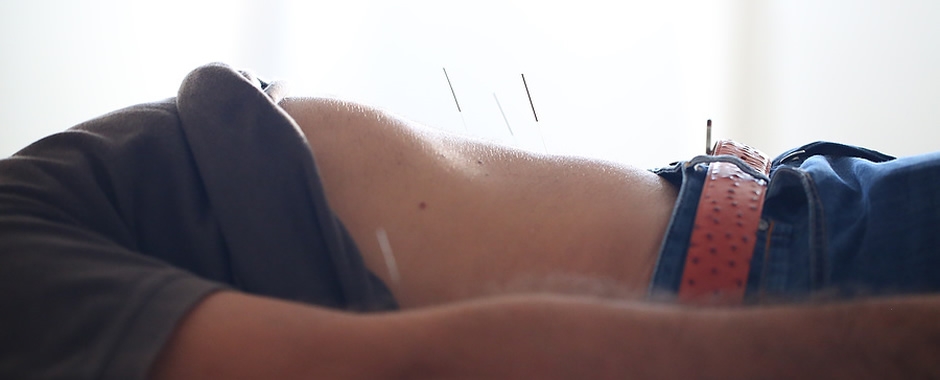
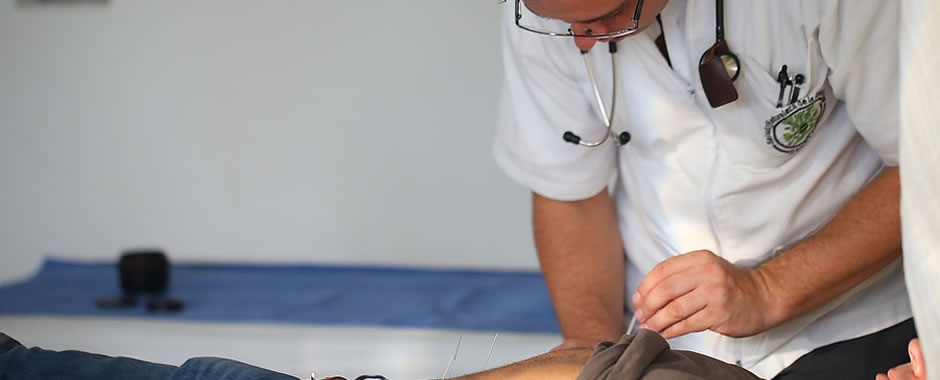
First, you will consult with your doctor concerning your ailment, to determine a diagnosis and identify an appropriate treatment plan that includes acupuncture. You will remove your watch and shoes, loosen any constricting clothing, and lie down on a comfortable treatment table, usually on your back. The doctor will sterilize the skin and place up to 30 needles into acupoints and gently manipulate them, often using a twirling motion to ‘seat’ the needles in the point. Common acupoints include feet, ankles, hands, wrists, head and ears.
Will it hurt?
Pain is not usually associated with acupuncture, as the needles do not penetrate deeply. There can be some discomfort, including a sensation of a mild electrical charge or cramping as needles are placed. Although these sensations are typically brief, they can be uncomfortable, particularly if a patient has not experienced acupuncture before.
How long does it last?
After the needles have been inserted, you will lie quietly, in a darkened setting, for 25-40 minutes. At the end of the treatment, the needles are removed and the skin once again wiped with alcohol. The entire visit will take at least one hour.
I know needles are used in acupuncture: is this safe?
Acupuncture is completely safe, as your doctor will use one of two methods: either your own set of new, reusable needles will be used and sterilized between sessions; or new disposable needles will be used. At Sanar, we use only new disposable needles after sterilizing the acupuncture sites.
How much does it cost?
Depending on the qualifications of the doctor and the location of treatment, an acupuncture treatment will usually cost between 100 and 500 pesos.
How often do I need to have acupuncture treatments?
Most ailments are successfully treated with acupuncture in three to ten sessions. This is something the doctor will discuss with you at each session, to determine how quickly the benefits are being felt and to decide, with you, how long to continue.
Will I have to come back for more treatments later?
It is common for follow up treatments to be beneficial in the long term alleviation of ailments. The duration of further treatment will be discussed with you in detail by your doctor.
Are there different acupuncture treatments for different ailments?
Additional styles of acupuncture may include moxibustion, cupping, electro-acupuncture or laser acupuncture and these variations are best explained by the doctor providing the therapy. As well, homeopathic supplements or herbal compounds may be recommended depending on the ailment.